

Dharma Bodies : ค้นหาหนังสือธรรมะ
หน้าหนังสือทั้งหมด
46
Mindfulness Practices in Buddhism
1. mindfulness of the body [kāyunupassanāsatipaṭṭhāna]: Continuously seeing and knowing the body in the body — that is to see and know the subtle inner bodies that lie hidden within our physical body:
This text delves into the four foundations of mindfulness (satipaṭṭhāna) in Buddhism. It teaches practitioners to continuously observe the body, feelings, the mind, and mental phenomena. 'Mindfulness
124
Understanding the Inner Bodies and Enlightenment
the centre of the body, in the same way as described earlier, in entering the centre of the Pathama Magga Sphere, successive inner bodies can be attained, going further inside the subtle human body —
This text discusses the progression through successive inner bodies leading to the Dhammakāya, emphasizing the distinction between mundane and transcendental bodies. It highlights that all worldly bod
136
Understanding the Inner Bodies on the Path to Enlightenment
them and go further through the centre until attaining the Body of Enlightenment — the most subtle of the inner bodies.
The inner bodies between the Paṭhama Magga Sphere and the Body of Enlightenment
This text delves into the various inner bodies that exist between the Paṭhama Magga Sphere and the Body of Enlightenment. These include the Subtle Human Body, Angelic Body, and several Brahma Bodies,

43
เสียงรอสายกับ Ring4U
DMC DIAC อีกหนึ่งช่องทางของเสียงรอสายกับ
ก้าวไกลกับเทคโนโลยี Ring4U (wap.ringforu.com)
สวัสดีครับเดือนนี้เราจะมาว่ากันในเรื่องของเสียงรอสายกันอีก แต่คราวนี้เราจะมาตั้งเสียงรอสายต่างๆ ผ่านโทรศัพท์มือถื
พบกับบริการเสียงรอสายจาก Ring4U ที่ให้คุณสามารถเลือกเสียงรอสายที่ต้องการผ่านโทรศัพท์มือถือ โดยมีตัวเลือกทั้งเพลงฟรีและเพลงทั่วไป นอกจากนี้ ยังมีห้องเพลงต่างๆ เช่น Buddha Words, Buddhistic Pray และ Dha
7
Congratulations Message from the Sangharaja of Bangladesh
Congratulations Message
from the Sangharaja of Bangladesh
As the Sangharaja of Bangladesh, Congratulations on the 55th Anniversary of Wat Phra Dhammakaya. On the cheerful occasion of the success of t
The Sangharaja of Bangladesh extends heartfelt congratulations on the 55th Anniversary of Wat Phra Dhammakaya, a prominent Buddhist organization. He expresses wishes for its continued prosperity, harm
17
55th Anniversary of Wat Phra Dhammakaya
Congratulations on the 55th Anniversary of Wat Phra Dhammakaya
On the joyous occasion of the 55th anniversary of Wat Phra Dhammakaya, we extend our most sincere congratulations!
For fifty-five years
On the 55th anniversary of Wat Phra Dhammakaya, we celebrate its 55-year journey of propagating the Dharma for all beings. The monastery has guided countless followers toward enlightenment through tea
137
Understanding the Bodies of Enlightenment
ment, the Arahatta Body of Enlightenment [Dhammakāya Arahat] and the Subtle Arahatta Body of Enlightenment.
Thus there are ten types of Bodies of Enlightenment.
The Benefits of Attaining the Inner Bod
This content discusses the ten types of Bodies of Enlightenment, including the Arahatta Body and Subtle Arahatta Body, emphasizing the benefits of attaining inner bodies for personal growth. Meditator
25
Living a Virtuous Life: Honoring Parents
living a virtuous life, showing good respect to them,
speaking to them in a nice and warm fashion, and
taking good care of them. Children should never hold
a grudge against their parents, regardless o
This text emphasizes the necessity of living a virtuous life by showing respect and care towards one's parents. It discusses the importance of not holding grudges against them, illustrating how parent
107
Understanding Astral and Celestial Bodies
Suzanne Jeffrey
astral body, but other bodies as well. If you look at light through a prism, you will see seven different colors. It is like that: the bodies are there, but unless you shine a light t
In this text, Suzanne Jeffrey discusses the existence of multiple bodies, including the astral body, and how they relate to meditation and defilements. The analogy of a prism illustrates that just as
113
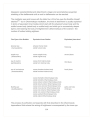
Discovering Inner Transcendental Bodies
He further discovered that when the mind is relaxed in a standstill state, while resting at the center of the Dhamma Sphere, inner transcendental bodies will emerge, one after another: from coarse hum
This text discusses the emergence of inner transcendental bodies through relaxation at the center of the Dhamma Sphere. As the mind achieves a state of calm and stillness, one can transition through v
114
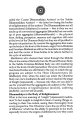
Understanding Dispassion and Detachment in Dhammakaya Meditation
dispassion (ekantanibbida) and detachment (viraga) and accomplishes sequential shedding of the defilements until an end to defilements can be reached.
The meditator sees and knows with the latter fou
This text delves into the significance of dispassion (ekantanibbida) and detachment (viraga) in the process of shedding defilements through meditation. It illustrates the attainment levels based on th
111
Understanding the Dhammakāya in Insight Meditation
called the ‘Coarse Dhammakāya Arahant’ or the ‘Subtle Dhammakāya Arahant’ — the latter two being the bodies of enlightenment of the arahant. The Dhammakāyas are all transcendental [lokuttara] in natur
This text delves into the concept of Dhammakāya Arahant, distinguishing between the Coarse and Subtle Dhammakāya. It explains that these bodies are transcendental and consist of pure aggregates that a
116
Understanding Nirvana: The Realm Beyond Existence
same happiness to us as if we were really in āyatanā nibbāna — but we are still ‘alive’ in our human body.
2. Nirvana without residual aggregates (Anupādisesa Nirvana [Nibbāna]) is the Nirvana that is
This text delves into the concepts of Āyatanā Nibbāna and Anupādisesa Nibbāna, explaining that Nirvana exists beyond the physical realm and is not bound by worldly elements. It describes Nirvana as a
123
Understanding Suffering and the Subtle Human Body
wealth. As the majority of sorts of suffering concerns material things, having attained the subtle human body, the mind, being unified with the subtle human body, is safely withdrawn beyond the reach
This text discusses why most people suffer due to attachment to their physical bodies and possessions, despite intellectually understanding Buddha's teachings on impermanence. The author emphasizes th
128
The Relationship Between Processing, Cognition, and Mindfulness
processing and cognition are nested together inseparably and as a unit take the form of the subtle physical body. If the four faculties are separated, the subtle physical body will die immediately — a
Processing and cognition are intimately linked, forming the subtle physical body. If four faculties are disconnected, the subtle body ceases to exist, impacting physical survival. Mindfulness includes
135
Understanding the Pathama Magga Sphere
the other virtues.
For as long as a meditator cultivates the Noble Eightfold
Path purely, completely and according to the principles of
the Middle Way (i.e. with the mind entering continuously
upon th
This text delves into the Pathama Magga Sphere, an important concept in meditation that arises when the Noble Eightfold Path is fully realized. It explains how the mind can be liberated from external
84
Bibliography of Buddhist Studies
Bibliography
Dutt, Nalinaksha. Mahayana Buddhism. Delhi: Motilal Banarsidass, 1978.
Geiger, Wilhelm. “Dhamma and Brahman.” Zeitschrift flour buddhismus (1921): 73-83.
Gombrich, Richard. “The Buddha’s
This bibliography encompasses significant scholarly works in Buddhist studies, offering insights into various aspects such as the early Buddhist philosophy, the concept of Dharmakāya, and teachings of
86
การวิเคราะห์พาลีกราฟและคัมภีร์มนต์ในพระพุทธศาสนา
Gilgit-Bamiyan Type I
Sander, Lore. 2000. “Appendix: A brief paleographical analysis of the Braḥmī manuscripts
in volume I.” In J. Braarvig, eds., Buddhist manuscripts vol 1. pp. 285 - 300. Oslo:
บทนี้นำเสนอการวิเคราะห์พาลีกราฟในคัมภีร์ Braḥmī และการศึกษาภาษาไทยของบทพระธรรมที่สำคัญ รวมถึงคำแปลของคำสอนจากพระพุทธเจ้าและปรัชญาเกี่ยวกับธรรมะจากแหล่งที่มาแตกต่างกัน แสดงให้เห็นถึงคุณค่าทางวัฒนธรรมแล
114
การศึกษาแนวทางมหายานในพระพุทธศาสนา
the Great Vehicle : Three Mahāyāna Buddhist Texts. Ann Arbor, Mich. : Collegiate Institute for the Study of Buddhist Literature and Center for South and Southeast Asian Studies, University of Michigan
บทความนี้นำเสนอการศึกษาเกี่ยวกับพระคัมภีร์มหายานสามเล่ม เน้นที่การตีความธรรมชาติของพระพุทธเจ้าและความไม่สามารถที่จะรู้จักธรรมได้ด้วยความรู้สึกทางประสาทสัมผัส นอกจากนี้ยังกล่าวถึงงานวิจัยที่เกี่ยวข้องก
73
Understanding Dharma and Buddhist Practices
gratitude; there is life after death; heavens and hells exist, and enlightenment is attainable.
Dharma
*Dharma* (Pali, Dhamma) has many meanings: the Truth, the way of the Nature, the right way of l
Dharma, meaning Truth and the way of Nature, is central to Buddhism. Buddhists are guided by three main practices: doing good, avoiding evil, and purifying the mind through meditation. They adhere to